Stablecoins
How to Expand Your Business Globally Through Crypto Payments — Insights from Moses Nkrumah
Oluwaferanmi Famuyiwa
•3 min read
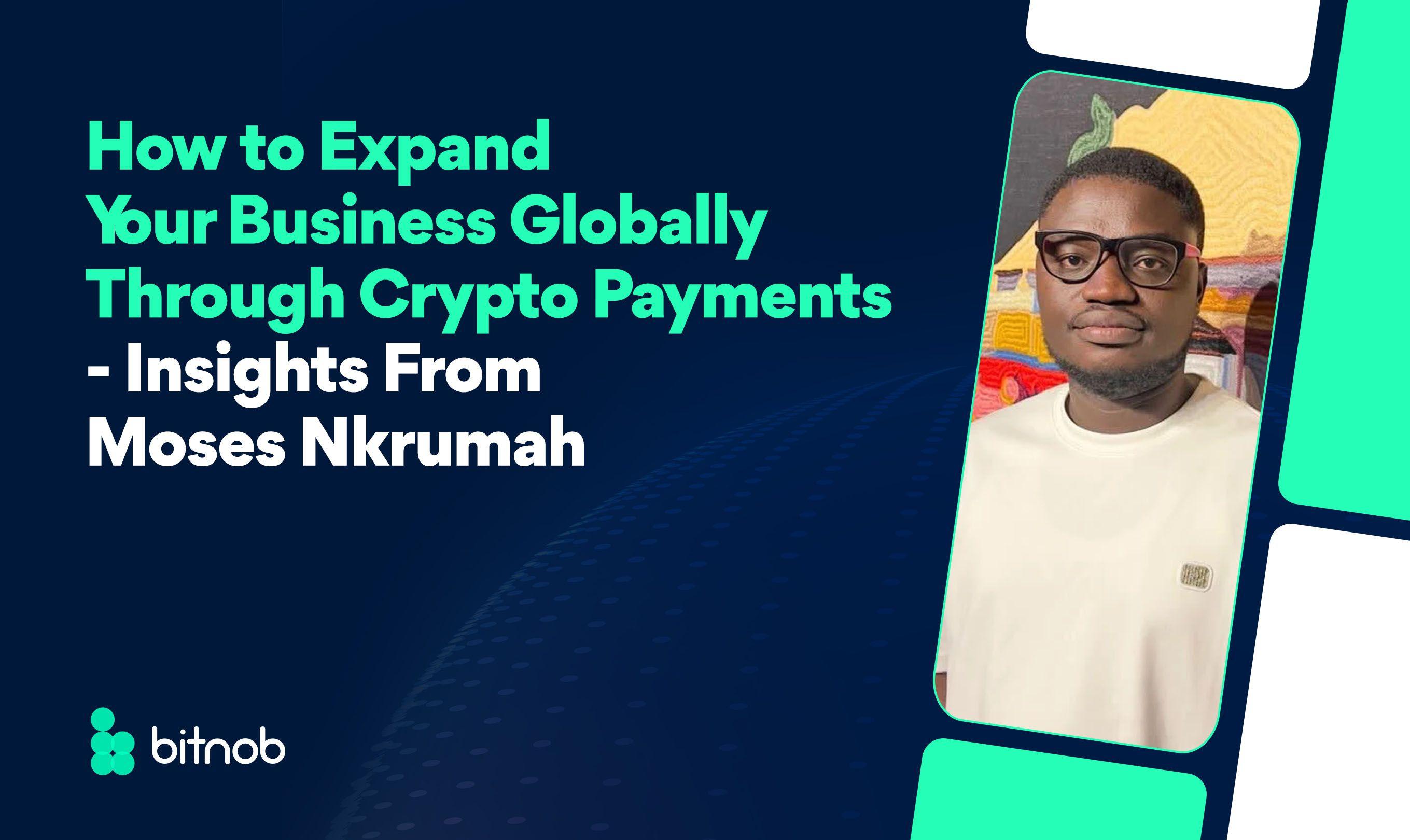
Discover how African businesses are using crypto payments to go global. Learn from Moses Nkrumah’s insights and how Bitnob simplifies cross-border growth.
For businesses especially those in Africa, digital commerce demands instant access, predictable value, and effortless movement across borders. Stablecoins like USDT, supported by platforms like Bitnob, are delivering exactly that.
In our recent Developer Session, Moses Nkrumah, Software Engineer at Bitnob, shared how crypto payments are reshaping global commerce. He explored real business use cases, essential considerations for integration, and lessons learned from growing startups across emerging markets.
In this blog, we’ll unpack his core insights and explain how you can expand your business globally, without waiting for the traditional systems to catch up.
Why Crypto Payments Matter for African Businesses
In many African countries, traditional financial infrastructure isn't designed to support fast, reliable international payments. Moses emphasized how this friction has forced entrepreneurs to look for alternatives. Crypto, especially stablecoins, offers a way around these constraints:
- Faster settlement: Instead of waiting days for funds to settle through banks, crypto payments are near-instant.
- Lower fees: Sending money across borders using traditional rails is expensive. Crypto offers cheaper alternatives, especially for micro-payments or recurring transactions.
- Greater access: Anyone with a smartphone and internet can receive crypto. This makes onboarding global customers easier—no bank account required.
The Case for Stablecoins like USDT
While Bitcoin holds long-term value and is great for savings or treasury management, Moses highlighted how USDT is efficient for day-to-day business transactions.
- It’s stable.
- It’s widely accepted.
- It bridges the volatility of crypto and the usability of fiat.
Businesses can receive payments in USDT from customers or clients in the US, Europe, Asia, and instantly convert to local currency via platforms like Bitnob. Bitnob has become a key player in solving for this complexity. For businesses that want to expand beyond their home market, Bitnob allows them to:
- Create USDT or BTC wallets instantly
- Receive international payments with zero hassle
- Withdraw directly into local currency across several African countries
- Access fast, secure settlement for client or supplier payments
Through its simple APIs and reliable payout infrastructure, Bitnob is quietly powering the next generation of African borderless businesses.
From Idea to Global with Just a Wallet
Moses pointed out that one of the most exciting things about building in this space is that you don’t need a million-dollar infrastructure to get started. With crypto, a developer or small business can:
- Launch a product
- Integrate crypto payments with Bitnob’s API
- Start serving a global audience
He encouraged developers to stop thinking local-only and begin to build with scale in mind. Also lean on platforms like Bitnob, which already handle compliance, liquidity, and settlement, so you can focus on product.
“You can receive payments in the same format as someone in the US, so why limit yourself to Ghana, Nigeria, or Kenya?” – Moses Nkrumah
Final Thoughts: Crypto is Not Just the Future, It’s the Now
As Moses shared, crypto isn’t some abstract future technology. It’s already being used to run real businesses, pay remote employees, accept global payments, and enter entirely new markets. The tools exist and the infrastructure is ready.
If you’re building a fintech product, launching a business, or expanding globally, the question isn't if you should integrate crypto, it's how fast. With platforms like Bitnob, you can move quickly and confidently. Ready to go global? Start here now